Business CPA McKinney AlternativeThe April letter and the asset list
The appraisal district is in town, and the April notices are real. The month still closes from the bank and the asset list, not from a walk across town.
List the guesses.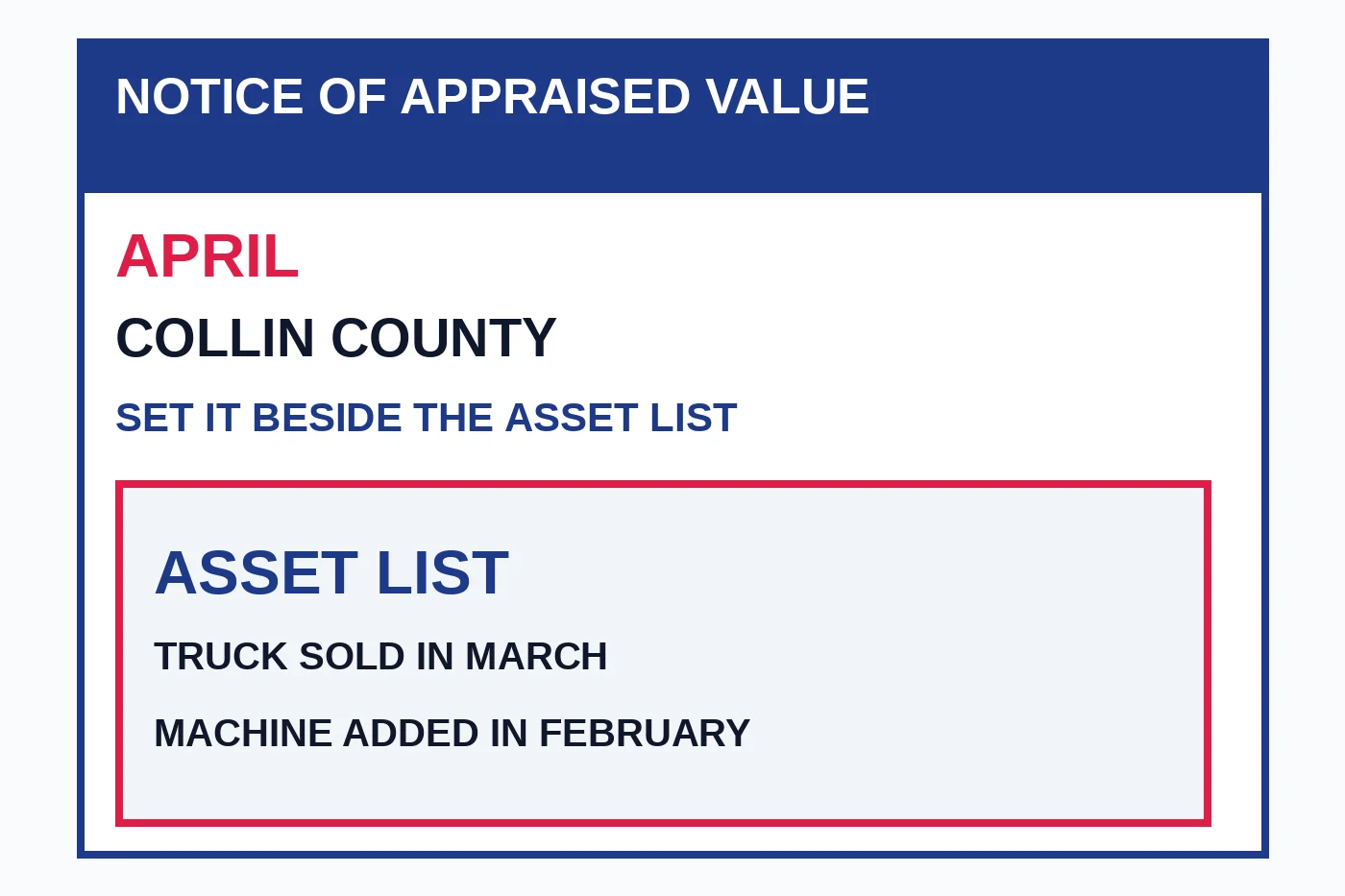
What the April letter is.
Collin Central Appraisal District sends notices of appraised value for real property in April. Owners open them at the kitchen table and feel the number before they have read the page. That feeling is fair. The letter is about the county's value, not about whether last month's books match the bank.
A rendition of business personal property, when one is owed, is a different piece of paper. It should be copied from the asset list in the books. Memory is a poor register. A truck that was sold in March should not still be on the list in April, and a machine that arrived in February should not be missing.
Highway 5 does not carry the filing.
Highway 5 still runs north and south through downtown, on through Melissa and Anna. Anyone who knows this part of the county knows that spine. We know it too. A notice does not care which mile of it you live on. If the truck sold in March is still on the asset list, the books and the notice are telling two stories, and the books are the ones we correct.
The district's public counter has hours. Those hours are useful when a form has to be handed to a person. They do not keep a month current. Webfile and the books are what keep the month current. We work from the file, on a screen, on the day we named.
What we do with the letter.
We read the notice beside the asset list and beside what you actually own. If the county's building value and your own sense of the building disagree, the protest calendar is the county's process, and we will not invent a result for it. What we will do is make sure the books are not telling a different story than the assets you have.
Property tax on the building, the sales tax return, and the franchise report land in different months and answer different questions. Mixing them into one anxious pile is how a letter gets ignored. We keep them in the month they belong to.
A list you can trust.
We keep the asset list plain. A description, the purchase date, and a yes or no on whether the thing is still here. Fancy categories make the rendition slower, and a later buyer has less to trust.
If the list has never been written down, the first month includes writing it. That is slower, and it is the month we would rather spend now than the week a notice arrives and nobody can say what the company owns.
Name the notice.
Tell us which letter is open. April's notice, a rendition, or something else.

You will be talking to the Steven Palmieri practice.